Design Trade Show Booth Online for PRINTING United Success
Designing a trade show booth online has revolutionized how exhibitors prepare for major industry events like PRINTING United. This digital approach enables marketing managers and procurement teams to visualize, customize, and approve booth concepts remotely—eliminating geographical barriers while accelerating project timelines, and design trade show booth online serves as the core workflow that makes such remote collaboration seamless and efficient.
Through advanced 3D modeling platforms and collaborative design tools, companies can now create exhibition spaces that balance brand storytelling with functional efficiency. Whether you're a startup founder seeking cost-effective solutions or a corporate manager overseeing large-scale installations, online booth design delivers the flexibility and precision needed to stand out at PRINTING United 2026, scheduled for September 23-25 in Las Vegas.
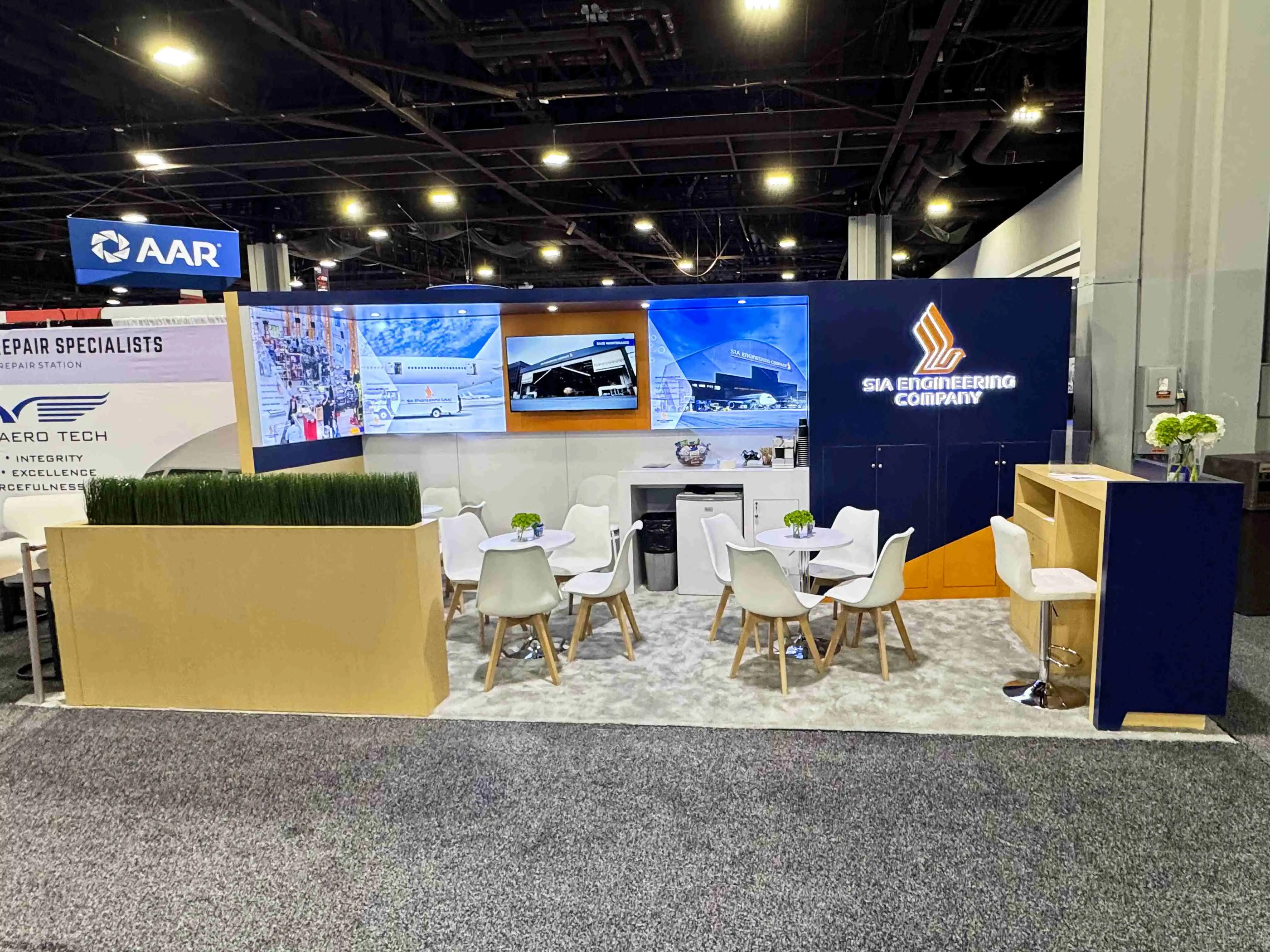
Understanding the Essentials of Designing Trade Show Booths Online
Core Principles for Visual Impact and Messaging Clarity
To make a good design trade show booth online, you need to know how space works in show buildings. Visual order affects how people see your brand from 15 to 20 feet away, at hallway crossings. Using SEG (Silicone Edge drawings) technology to make bold drawings gives you clear, colourful images that stay true to colour even when the lighting is bad. Your value offer needs to be clear in three seconds, which is how long people usually look at displays before choosing to interact.
Good designs use traffic flow mechanics to put show areas away from areas where there is a lot of traffic and make natural paths to product displays. Lighting is important for more than just looks. LED systems with CRI ratings above 90 make sure that product colours look like they do in real life. This is especially important for printing technology shows at PRINTING United, where buyers care about colour accuracy.
Cost Savings and Customization Benefits
When compared to old-fashioned methods, online design platforms cut project costs by 30 to 40 percent. Digital collaboration gets rid of the need to travel for design meetings and lets changes be made in real time that would normally need expensive revision cycles. Before fabrication starts, clients are given photorealistic renderings that show exactly how the aluminium extrusion frames, fabric graphics, and interactive elements will fit together.
Customisation goes beyond how something looks and includes structural engineering. Online-designed modular systems can be rearranged to fit different booth sizes. For example, a 20x20 island booth at PRINTING United can be broken down into 10x20 pieces for smaller regional shows. This use of assets makes the most of budgets for purchases while keeping the brand consistent across many events throughout the year.
Emerging Trends in Sustainable and Modular Structures
Sustainability used to be an option, but now it's a must when building a booth. As vendors reply to companies' ESG promises, FSC-certified wood, recycled aluminium frames, and fabrics without PVC are now the most common requirements. These materials don't weaken structures—modern recovered aluminium can hold the same amount of weight as new material while cutting carbon emissions by 95%.
Concerns about the earth and money are both taken care of by modular buildings. Frame systems that interlock let parts do more than one thing during an event. If you take care of your modular architecture investment, it will last for five to seven years of exhibitions. Tension cloth graphics can be easily and cheaply changed to match a new brand, and the frame underneath stays the same. This gives you more options than with traditional hard-wall construction.
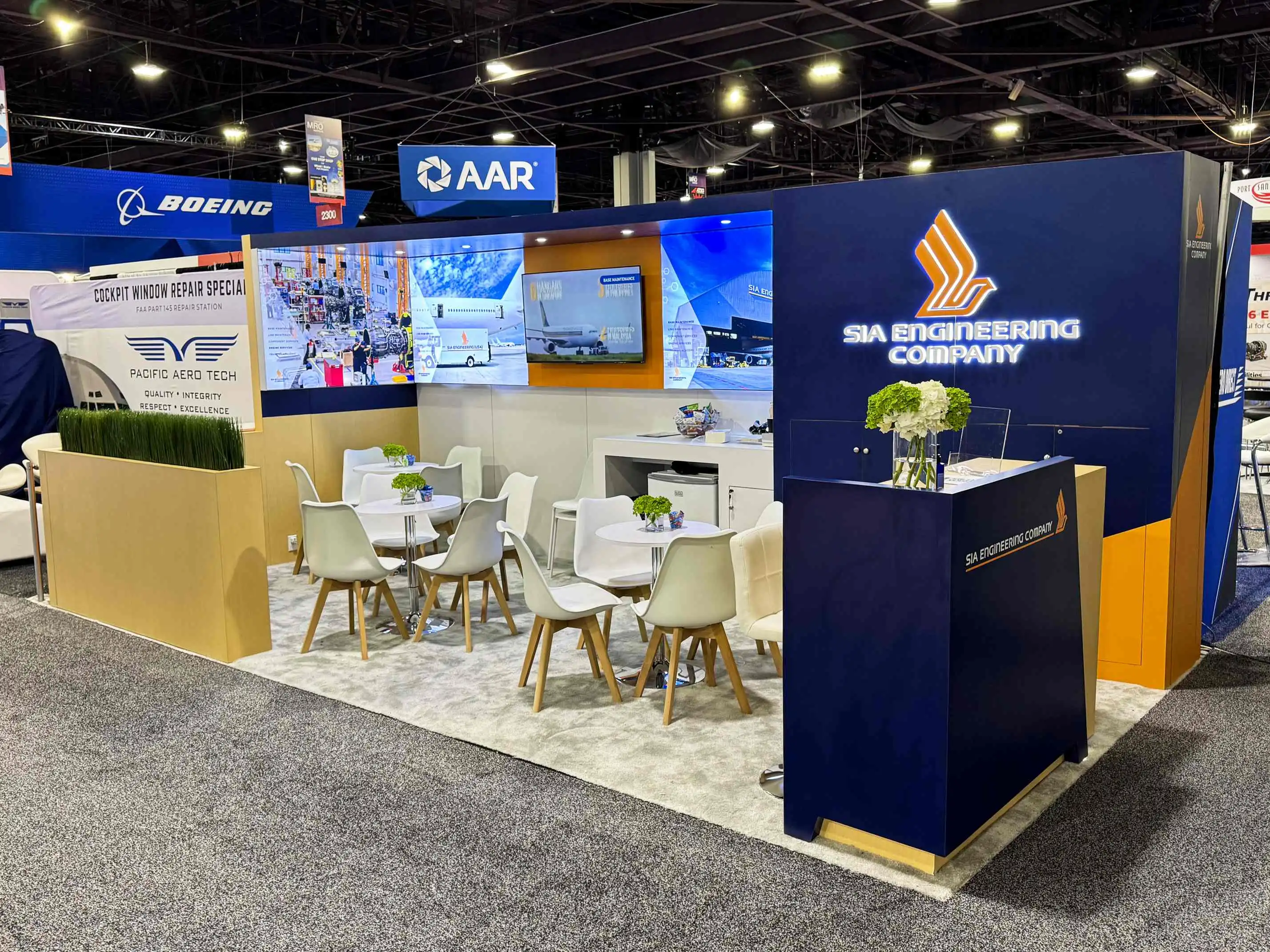
Step-by-Step Guide to Creating an Effective Trade Show Booth Online
Understanding Target Audience and Trade Show Objectives
Before choosing design features, buying teams need to set goals that can be measured. Are you looking for new customers, getting new leads, or building brand recognition? At PRINTING United, a company that makes medical devices might value private demonstration areas for FDA-approved equipment more than others. For example, a software company might focus on open layouts that encourage a lot of foot traffic.
Design decisions are based on audience profiling. Corporate marketing managers usually want high-end finishes like brushed aluminium accents, backlit panels, and built-in audiovisual systems that show they have been in the market for a while. Startup founders often get the best return on investment (ROI) by strategically placing graphics and renting furniture instead of having parts built from scratch. Knowing your different groups of people—whether they are procurement directors, sales teams, or end users—affects everything from the height of the counters (34 inches for ADA compliance) to where the technology is integrated.
Integrating Brand Identity Seamlessly
When a brand is consistent across all digital and real touchpoints, it helps people remember it. Online design tools let you match colours exactly using Pantone standards, which makes sure that booth images are in line with company guidelines for style. The choice of font affects how easy it is to read from a distance. Sans-serif fonts at least 72 points are easy to read from 10 feet away in crowded hallways.
Three-dimensional business statement is more than just a logo. Architectural elements can help build a brand's personality. For example, curved structures communicate creativity and friendliness, while angular designs convey accuracy and dependability. Material choices send messages without the person being aware of it. For example, glass shows that something is clear, natural wood shows that something is eco-friendly, and shiny metal shows that something is high-tech.
Selecting Reliable 3D Modeling Platforms
Accurate representations of space can be made with professional platforms like SketchUp Pro, Autodesk 3ds Max, or specialised exhibition software. These tools take into account the limitations of the venue, such as the height of the ceiling, where the columns are placed, and where the electrical outlets are located—all of which are important at the Las Vegas Convention Center, where PRINTING United takes place.
Virtual walkthroughs let people who have a stake in the booth see how it will look from the point of view of a visitor before the booth is built. This stops mistakes that cost a lot of money, like not being able to see or not having enough aisle access. Sharing secure links with international stakeholders lets procurement teams get approval from multiple decision-makers without having to coordinate travel plans.
Customization Strategies Using Interactive Digital Assets
Interactive parts make people stay interested for 40 to 60% longer. Touchscreens that show product configurators, virtual reality demos, or digital catalogues turn watching something into doing something. When designing online, it's important to be clear about power needs from the start. Most interactive displays need dedicated 20-amp circuits, and general service contractors charge extra for electrical orders that are turned in late.
Compliance Checklist for Design and Operational Standards
Integrating digital assets needs to find a balance between new ideas and dependability. Video walls make beautiful backgrounds, but they need two sets of systems to make sure they don't break down during show times. For live demonstrations, Wi-Fi connections need to be stable, and they often need dedicated bandwidth that is separate from the public networks in the convention center. By planning these technical details during the design trade show booth online process, practical failures that hurt brand trust can be avoided.
Exhibition sites have strict rules about how booths can be built. The tallest buildings that can be built are usually limited to 12 feet for inline booths and 16 to 20 feet for island layouts. However, the Las Vegas Convention Center does accept exceptions with engineered plans. According to fire safety rules, materials must be flame-resistant and meet NFPA 701 standards. All cloth images must have certification tags that inspectors can see.
Line-of-sight rules say that neighbours can't't see through bigger booths. When hanging signs or second-level decks are added to island booths, stamped structural engineering drawings are often needed. By sending these papers during online design review, which usually happens 30 days before the show, you can avoid last-minute rejects that throw off schedules. For drayage pricing, which is based on weight distribution estimates, the cost per hundredweight (CWT) is important. This means that lightweight aluminium frames are cheaper than steel building.
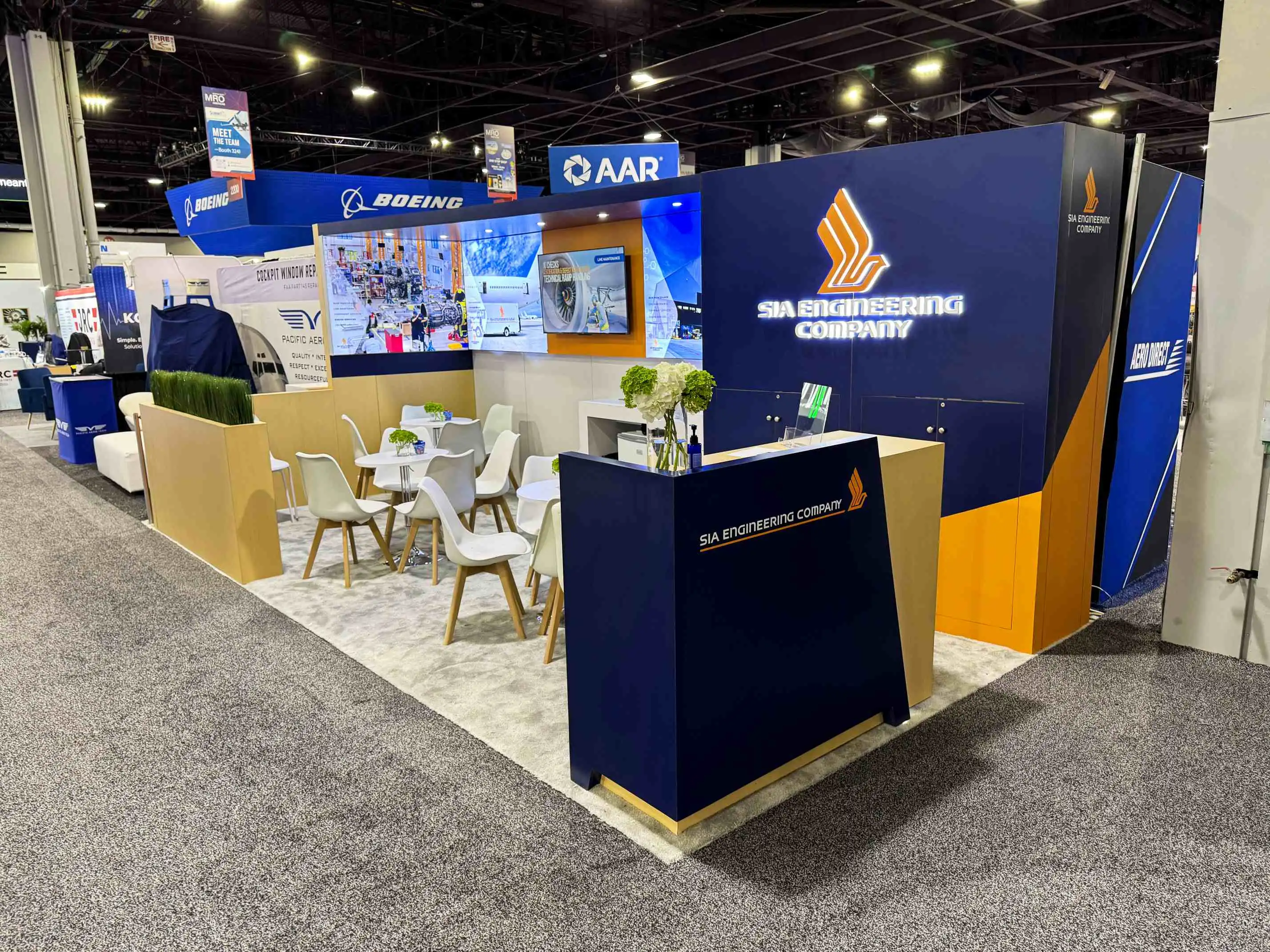
Comparing Online Trade Show Booth Design Solutions for B2B Procurement
Cost, Flexibility, and Project Duration Analysis
Analysis of cost, flexibility, and project length. There are many types of design trade show booth online services, from template-based platforms that charge $500 to $2,000 for basic setups to full-service custom design that starts at $5,000. For companies going to their first shows with standard 10x10 inline spaces, template options work well. Companies that go to a lot of events a year or need to make their brand stand out in a competitive industry can save money by using custom design.
There is a secret cost to flexibility. Custom designs can fit different product sizes, special lighting for displaying industrial equipment, or floors that are stronger to hold heavy machinery demonstrations. Template systems have limits—standard graphic panel sizes might not work with your brand's visual needs, forcing you to make concessions that weaken the marketing impact.
Project timelines are very different. Template changes are finished in two to three weeks, which is good for exhibitors who have to commit quickly to shows like Global Security Exchange in Atlanta (September 14–16, 2026) in a hurry. Custom fabrication takes 12 to 16 weeks, which includes approval of the design, CNC cutting, finishing, and graphic production. This is important to keep in mind when planning for big trade shows like IMTS in Chicago (September 14–16, 2026), where manufacturing brands need displays that are perfectly engineered.
Custom Versus Template-Based Online Services
Custom booth design takes into account the uniqueness of each brand while meeting technical requirements. A medical sales director showing off diagnostic equipment at LOUPE Americas in Chicago (September 15–17, 2026) needs private meeting rooms, controlled lighting to keep screens from getting too bright, and separate power for sensitive electronics. These are all needs that template systems rarely meet.
With template-based services, you can be sure of the prices and get them up and running faster. Companies that make simple products, like printed materials, software demos, or promotional items, can get good results by using pre-designed structures that can be changed by making graphic changes. The price difference can be big: a 20x20 custom island booth costs between $45,000 and $75,000, while options that are built on templates might cost between $18,000 and $28,000.
When calculating return on investment, reusability must be taken into account. Costs for custom aluminium frame structures used for seven years at more than twenty shows range from about $2,000 to $3,500 per event. Rental options that cost between $8,000 and $12,000 per show make financial sense for businesses that only go to a few shows a year or want to try out new markets before buying assets.
Pricing Structures and ROI Assessment
The clear price is made up of design fees (10–15% of the total budget), manufacturing costs (materials and labour), graphics production, and shipping. Moving things, setting them up, and storing them between events all have hidden costs. Online design consultations should make it clear if quotes include installation supervision, which is very important when showing your products at union-workplace venues like McCormick Place in Chicago, which hosts IMTS and LOUPE Americas.
ROI analysis looks at more than just the cost of building the booth. The most important thing is measuring how many qualified leads you get. For example, a booth that brings in 150 qualified leads for $50,000 costs $333 per lead, which is about the same as digital marketing in many B2B fields. Even though it's harder to measure, brand impression value is a big deal when you're showing up at prestigious events like PRINTING United with leaders in your field.
Long-term ROI is affected by the costs of storage and repairs. Modular systems that are easy to take apart cut store space by 60 to 70%, which greatly lowers shipping costs. When comparing the costs of buying vs. renting, you should think about how much it will cost to replace parts, like updating graphics or replacing worn-out fabric panels.
Trusted Providers with Proven Track Records
When choosing a design partner, you need to look at their portfolios to see if they have experience with your industry and booth size category. If a company only does 10x10 portable displays, they might not be able to do the engineering needed for 30x40 island booths that need structural calculations. Ask for case studies that show completed projects at venues that match your target shows. A company that has worked with the Las Vegas Convention Center before knows the rules that affect PRINTING United exhibitors.
More weight is given to B2B recommendations than to reviews. Talking to procurement managers at companies like yours will show you how responsive providers are in times of trouble, like when shipments get damaged, design changes are made at the last minute, or problems arise during installation. Check to see if the provider has a local footprint or partnerships in the places you list. Exhibitors at CEDIA in Denver (September 1–4, 2026) can work with partners whose installation crews are based in Colorado and know how the Colorado Convention Center works.
Certifications show that a person meets professional standards. Joining groups like the Exhibit Designers and Producers Association (EDPA) or the International Association of Exhibitions and Events (IAEE) shows that you are dedicated to following the best practices in your field. At the very least, $2–5 million in liability insurance protects against accidents that might happen during installation, which is important when working with electrical systems and high platforms.
How to Procure and Order Custom Trade Show Booth Design Online
Best Practices for Briefing Design Service Providers
The best ways for briefing design service providers to do their jobs. Creative briefs that work speed up the design trade show booth online process and keep people from misunderstanding each other. "Generate 200 qualified leads" or "Demonstrate three new product lines simultaneously" are better goals to start with than "create an attractive booth." Include brand guidelines, photos of competing booths from past shows, and must-have features like product display pedestals or private meeting rooms.
Technical specifications keep the scope from growing. Describe the power needs (number and amperage of electrical drops), the internet connections needed, and how the AV equipment will be connected. Make sure you know how much space you need for storage—brochures, product samples, and staff personal things all need their own space that doesn't get in the way of places that people can see. Make it clear if you're buying or renting, as this changes the materials you choose and the way the building is done.
Budget openness lets reasonable ideas come up. "$60,000 total project budget, including graphics and installation" helps providers come up with good solutions instead of unrealistic ideas that will need to be "value engineered" later. By separating budgets into groups like structure, graphics, technology, and logistics, you can see what parts are flexible and what parts can't be changed.
Managing International and Domestic Project Collaboration
Teams that work in marketing, sales, and operations all need a central place to talk to each other. As plans change, cloud-based project management tools like Asana or Trello keep track of all the different versions. Scheduled video conferences with screen-sharing allow feedback on 3D renderings in real time, which works better than emailing about problems with space.
When working with fabrication sites, time zone planning is important. Setting clear approval dates keeps things on time. For example, when teams work in different parts of the world, a two-day reaction window might include the weekend. Giving everyone a single point of contact who can make decisions speeds up revisions and stops the design-by-committee paralysis that slows things down.
Even in English-speaking countries, clear language is important. In the context of an exhibition, terms like "inline booth" and "peninsula configuration" mean certain things. Technical glossaries clear up confusion, especially when operations teams that aren't familiar with trade show conventions are involved in buying decisions.
Understanding Design Package Scope and Add-Ons
A lot of standard design packages come with 3D models, structural plans, and the ability to prepare graphic files. Better packages include photorealistic visualisations that show how the booth will look with venue lighting, virtual reality walkthroughs, or animation scenes that show how interactive elements work. These special services cost 15–25% more, but they speed up the approval process by getting rid of any doubts.
Coordination of installation is a useful extra. Turnkey service providers manage the relationships with contractors, oversee the assembly on-site, and deal with the inevitable changes that need to be made at the last minute. This service, which usually costs 8–12% of the booth's building costs, is very helpful for businesses that don't have experienced trade show staff or that are showing their products in faraway cities like Atlanta for Global Security Exchange.
Timeline Organization and Quality Control Processes
The scale of graphics production needs to be made clear. Does the price only include the design files, or does it also include printing and finishing? Depending on how complicated they are, large-format dye-sublimation fabric graphics for a 20x20 booth range in price from $3,000 to $6,000. Putting grease on the edges of SEG frames adds to the cost of labour. Budget surprises can be avoided by double-checking these details during procurement.
Timelines for projects that work well work backwards from the dates of installation (I&D). Exhibitors at PRINTING United 2026 who want to set up on September 23 should finish their plans by June 23 so that they have 12 weeks to make the displays and ship them. Design approval (week 2), engineering plans (week 4), buying materials (week 6), finishing the build (week 10), and the pre-show check (week 11) are all important steps.
Checkpoints for quality control stop problems from getting to the show halls. Pre-production models make sure that the colours and finishes of the graphics are correct. During mid-fabrication checks, mistakes in measurements are found before the final assembly. Complete booth mock-ups, which involve putting together the whole structure at a fabrication facility, find fit problems that can't be seen in separate parts. Having photos or videos of these inspections gives procurement teams confidence that the requirements are met.
Shipping logistics need to be carefully planned out. In the United States, it usually takes 5 to 7 work days for goods to move from fabrication plants to show sites. Convention centers open their advanced warehouse receiving 10 to 14 days before the start of the show. Discounted drayage rates are often offered to encourage early delivery. Late passengers are charged extra, sometimes 100–200% more, so sticking to the schedule is financially essential.
Leveraging Trade Show Booth Design for PRINTING United Success
Real-World Case Studies and Measurable Outcomes
A medium-sized company that makes printing equipment changed the layout of their design trade show booth online before PRINTING United 2024. Instead of having closed display areas, they now have an open theater-style layout. This change brought 180% more people to the booth and 45% more suitable leads. A 12-foot-tall LED wall showing live demos drew people from across the hall to the booth. After the show, an analysis showed that 68% of leads went on to have sales conversations, up from 41% the year before.
In a different case, a new company entered PRINTING United for the first time with only $22,000 to spend. They worked with an experienced company that specialises in low-cost solutions to make a 10x20 straight booth out of rental frame systems and custom images. Strategic placing of hands-on practice areas encouraged attendees to participate, which led to 127 qualified leads and a customer acquisition cost of $173, which is a lot less than the average of $340 per lead from their digital marketing platforms.
Established brands demonstrate different metrics. A large company's custom 40x40 island booth at PRINTING United had a two-story building with private meeting rooms, product demonstrations on the ground floor, and a hospitality suite on the upper level. Even though there were 89 leads, the average deal size was over $480,000, which made the $210,000 booth investment a very good one. Because the design was flexible, it could be changed for regional shows throughout the next year, making the best use of the assets.
Psychological Triggers and Soft Branding Techniques
Using sensory marketing techniques makes booths easier to remember. Slightly diffusing scents—coffee smells for morning meetings, lemon scents for afternoon energy—makes our brains subconsciously connect good things. Tactile elements, like material samples, product parts that visitors can handle, or textured wall surfaces, make people more likely to interact with them. This makes the brain work harder and help memories form.
Colour psychology affects how we think and act. Medical and tech brands like the colour blue because it makes people feel safe and trustworthy. Orange is often used to represent energy and new ideas in artistic and startup businesses. Colour temperature affects dwell time. Warmer tones (3000–3500K lighting) make spaces comfortable for longer conversations, while cooler temperatures (5000–6500K lighting) get people excited for quick presentations.
Preparing for Hybrid and Virtual Trade Show Adaptation
Visitors' actions can be predicted based on how they feel about a place. Open sight lines from aisles make barriers less noticeable, which raises the rate of entry by 35–40%. Slightly raised (6 to 8 inches) display platforms make focus points without getting in the way of seeing. Putting products strategically at eye level (60 to 66 inches) naturally gets people's attention. Lower shelves keep extras and promotional items out of sight.
Hybrid events that combine in-person and online attendance are now commonplace. Booth designs now include backgrounds that are ready for livestreamed demos, so the brand stays the same for both in-person and online viewers. Lighting has to do two things: it has to light up goods for people to see and it has to provide broadcast-quality lighting for video feeds without casting sharp shadows or glare.
Parts of a virtual booth make real presence stronger. 3D virtual worlds let people from far away move around in digital copies, getting information about products, downloading resources, and setting up video calls with sales reps. These platforms connect to CRM systems and keep track of the actions of virtual visitors in the same way that physical booth traffic analytics do.
To future-proof investments, you have to make sure that the technology can be changed easily. Modular structures can adapt to new technologies by adding mounting points for future screens, wire management systems that can handle higher bandwidth needs, and extra power capacity that goes beyond what is needed now. As technology improves, a booth built in 2026 should still work well in 2032, without having to be completely rebuilt.
Conclusion
At competitive events like PRINTING United and the big September 2026 trade show tour, the success of an exhibition depends on how well the design trade show booth online is handled. Traditional ways of designing can't compare to online methods when it comes to saving money, making changes precisely, and working together easily. Understanding the technical details, such as load-bearing calculations and NFPA fire safety compliance, helps you avoid mistakes that cost a lot of money and protects your brand.
For procurement to go well, providers need to be judged on their appropriate knowledge, clear price, and proven ability to carry out the work. Whether you're the founder of a startup trying to make the most of a small budget or the marketing manager of a large company, working with experienced booth designers will make sure that your presence at an exhibition leads to measurable business results. As physical and digital exhibitions come together, designers need to think ahead about how to make designs that meet both short-term needs and long-term strategic needs.
FAQ
How much lead time should I allow for custom booth design before PRINTING United?
Allow at least 12 to 16 weeks for design trade show booth online fabrication, going backwards from when the booth will be installed at the show. Approval of the design usually takes two to three weeks, followed by two more weeks for engineering documentation and eight to ten weeks for fabrication. You can get rush services in 6 to 8 weeks, but they cost 20 to 30 percent more. Template-based or rental options can be put into action in four to six weeks. September shows like PRINTING United gain from starting earlier because of the summer holidays, which can make shipping and making the prints take longer.
Can online booth designs accommodate specialized equipment displays?
Professional online design services take into account specific needs, such as power infrastructure, climate control for sensitive electronics, and reinforced floors that can support heavy machinery. During the first meeting, you should give details about the equipment, such as its size, weight, power needs, and operating clearances. Designers use these parameters in structural engineering to make sure that the demonstration areas work and don't exceed the venue's load limits. This feature is very important for companies that show off manufacturing tools at technology shows like IMTS.
What happens if my booth design doesn't comply with venue regulations?
Reputable design firms make sure compliance before they start manufacturing by reading place exhibitor guides and sending in the necessary paperwork. The Las Vegas Convention Center, which is holding PRINTING United, puts out rules about electricity standards, fire safety, and height limits. Providers who have worked at this venue before know exactly what is needed. If non-compliant designs are found during installation, they need to be changed or taken down, which can be expensive and could stop people from participating in the show. Make sure that your provider will promise compliance and take care of any engineering certifications that are needed.
How can I get the most out of my trade show booth investment?
Designed to be used at more than one show by using modular construction that can be rearranged to fit different booth sizes. Choose materials that will last and can handle being put together many times. Graphics should be updated on a regular basis, and structure parts should be maintained so that the investment is spread out over several events.
After the show, keep track of lead generation metrics and conversion rates to figure out how much it really costs to get a new customer. Include technology that quickly records information about attendees so that quick follow-up can turn booth visits into sales talks. Exhibitors who are going to more than one show in September 2026 will benefit from designs that can be used in a variety of industries and building layouts.
Partner with HR Exhibits Service, Inc. for Your Next Exhibition
It takes more than artistic vision to make an exhibition experience that people will remember. It also needs careful planning, building knowledge, and the ability to carry out the plan on-site. HR Exhibits Service, Inc. helps exhibitors get ready for PRINTING United 2026 and other big industry events in September 2026 by providing design trade show booth online and construction services. Our facility in Las Vegas helps companies that are showing at the PRINTING United Expo (September 23–25) without having to deal with the hassles of arranging with faraway providers. This also cuts down on drayage costs by a large amount.
We work with exhibitors from the medical devices, business printing, technology, and production industries at shows like LOUPE Americas, IMTS in Chicago, CEDIA in Denver, and Global Security Exchange in Atlanta. Our team takes care of every step, from coming up with the initial idea to installing the end product, whether you need a simple 10x10 inline display or a complex 50x50 island booth with multiple levels of structures.
As a maker and provider with extensive experience in booth design, we offer both modular rental systems and fully custom fabrication — whether you prefer the efficiency of rental options or a fully branded custom build, we can tailor a solution to your needs. Contact us at info@hrexhibits.com to share your requirements, and we'll help you find the right balance between budget, branding, and the high-quality standards that procurement professionals expect.
References
1. "Trade Show Exhibiting: The Insider's Guide for Entrepreneurs" - Exhibit Surveys, Inc. Industry Research Report, 2025
2. "Spatial Design and Visitor Engagement in Exhibition Environments" - Journal of Convention & Event Tourism, Volume 24, 2024
3. "Sustainable Practices in Trade Show Exhibit Design and Construction" - EDPA White Paper, Exhibition Industry Sustainability Standards, 2025
4. "B2B Lead Generation Strategies: Measuring Trade Show ROI" - Center for Exhibition Industry Research (CEIR), 2024 Annual Study
5. "Technical Standards for Portable Exhibit Construction" - International Association of Exhibitions and Events, Industry Guidelines 2025
6. "Color Psychology and Spatial Planning in Commercial Environments" - Environmental Design Research Association, Conference Proceedings 2024

Embark on Your Journey to Exceptional Exhibitions! Contact HR Exhibits Today to Transform Your Vision into Global Success.

HR Exhibits Service, Inc.

